
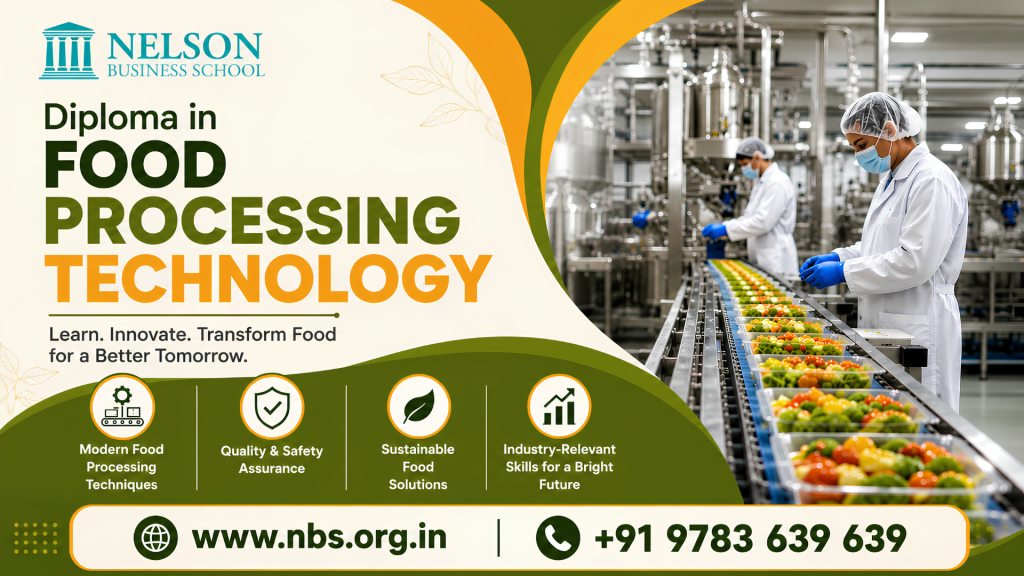
How Diploma in Food Processing Technology Prepares You for the Food Industry
Introduction
The food industry is one of the largest and most essential sectors in the global economy — spanning agriculture, manufacturing, packaging, quality control, and distribution. As consumer demand grows for packaged, processed, and export-quality food products, the industry needs skilled professionals who understand both the science and business of food production.
This is exactly where a Diploma in Food Processing Technology comes in. Designed to bridge the gap between raw agricultural produce and market-ready food products, this program equips students with the technical knowledge and practical skills needed to thrive in one of the world’s most stable and growing industries. This blog explores exactly how this diploma prepares graduates for real careers in the food sector.
What Is a Diploma in Food Processing Technology?
A Diploma in Food Processing Technology is a specialized program that trains students in the science, technology, and management of converting raw food materials into safe, consumable, and marketable products. Core areas typically include:
- 1. Food science and preservation techniques
- 2. Food safety and quality control
- 3. Processing equipment and machinery operations
- 4. Packaging technology
- 5. Food microbiology and hygiene standards
- 6. Supply chain and food industry regulations
The program combines theoretical coursework with hands-on lab and plant training, ensuring graduates understand both the “why” and the “how” of food processing.
Why the Food Processing Industry Needs Skilled Professionals
1. Rising Demand for Processed and Packaged Foods
As urbanization and busy lifestyles increase demand for convenient, packaged, and ready-to-eat food products, food companies need trained professionals who can manage large-scale processing operations efficiently.
2. Growing Focus on Food Safety and Quality Standards
With stricter food safety regulations and rising consumer awareness, companies increasingly require staff trained specifically in quality control, hygiene standards, and regulatory compliance.
3. Expansion of Food Exports
As countries expand food exports to global markets, professionals who understand international food safety standards and packaging requirements become increasingly valuable.
4. Reducing Post-Harvest Losses
A significant portion of agricultural produce is lost due to inadequate processing and storage infrastructure. Trained food technologists play a key role in reducing this waste through better processing and preservation techniques.
How a Diploma in Food Processing Technology Builds Industry Readiness
1. Hands-On Technical Training
Unlike purely theoretical programs, a food processing diploma typically includes lab work and plant visits, giving students direct exposure to real processing equipment, preservation techniques, and production workflows used in the industry.
2. Food Safety and Quality Control Expertise
Students learn food safety management systems (such as HACCP principles), quality testing methods, and hygiene protocols — skills that are directly applicable to quality control and food safety roles across the industry.
3. Understanding of Processing and Preservation Methods
The curriculum covers various food preservation techniques — thermal processing, freezing, dehydration, fermentation, and packaging — preparing graduates to work across diverse product categories, from dairy to packaged snacks.
4. Exposure to Food Industry Regulations
Food businesses operate under strict regulatory frameworks (such as FSSAI standards in India). Diploma programs typically introduce students to these regulations, helping them understand compliance requirements from day one on the job.
5. Packaging and Shelf-Life Knowledge
Since packaging affects both product safety and shelf life, students learn packaging materials, technologies, and labeling requirements — an increasingly important skill area as sustainable packaging becomes a priority for food companies.
6. Basic Food Business and Supply Chain Understanding
Beyond the technical side, many programs also introduce students to food supply chain management, giving them a broader understanding of how products move from processing units to retail shelves.
7. Practical Project and Internship Experience
Capstone projects or internships allow students to apply classroom learning in real food processing environments, building both technical competence and industry-relevant work experience before graduation.
Core Curriculum Areas
| Module | Key Focus Areas |
|---|---|
| Food Science Fundamentals | Composition, nutrition, and chemistry of food |
| Food Preservation Techniques | Thermal processing, freezing, drying, fermentation |
| Food Safety & Quality Control | HACCP principles, quality testing, hygiene standards |
| Food Microbiology | Spoilage organisms, foodborne pathogens, sanitation |
| Processing Equipment & Machinery | Operation and maintenance of processing equipment |
| Packaging Technology | Packaging materials, shelf-life, labeling regulations |
| Food Industry Regulations | Compliance standards (e.g., FSSAI, export requirements) |
| Capstone Project / Internship | Applied, real-world food processing experience |
Career Opportunities After Diploma in Food Processing Technology
Graduates can pursue roles such as:
- 1. Food Technologist
- 2. Quality Control/Quality Assurance Executive
- 3. Production Supervisor – Food Processing Units
- 4. Food Safety Officer
- 5. R&D Assistant – Food Product Development
- 6. Packaging Executive
- 7. Supply Chain Coordinator – Food Industry
Industries and Employers Hiring Food Processing Graduates
- 1. Food manufacturing and FMCG companies
- 2. Dairy and beverage processing units
- 3. Agro-processing and export businesses
- 4. Packaged and frozen food companies
- 5. Food safety and regulatory bodies
- 6. Hospitality and catering supply chains
Salary Expectations
Entry-level roles for Diploma in Food Processing Technology graduates typically range from ₹2.5–5 LPA, with steady growth potential as professionals gain experience in specialized areas like quality assurance, production management, or food safety compliance.
Diploma in Food Processing Technology vs. B.Tech in Food Technology
| Factor | Diploma in Food Processing | B.Tech in Food Technology |
|---|---|---|
| Duration | Typically 1–2 years | 4 years |
| Focus | Practical, industry-oriented skills | Broader technical and engineering depth |
| Cost | Generally more affordable | Higher investment |
| Best For | Quick entry into the workforce | Long-term technical/R&D career paths |
| Entry Speed | Faster entry into industry roles | Longer academic commitment |
If your goal is practical, hands-on skills for a quicker entry into food processing operations or quality roles, a diploma is often the more efficient path. For those aiming at technical R&D or engineering-heavy roles, a B.Tech may offer deeper foundational knowledge.
Top Skills the Food Industry Looks For
- 1. Food safety and hygiene knowledge (HACCP, GMP principles)
- 2. Understanding of processing and preservation techniques
- 3. Quality control and testing skills
- 4. Attention to detail and regulatory compliance awareness
- 5. Basic knowledge of packaging and labeling standards
- 6. Problem-solving in production environments
What to Look for in a Top Diploma in Food Processing Technology Program
When choosing where to study, prioritize:
- 1. Hands-on lab and plant training — not just classroom theory
- 2. Faculty with real food industry experience
- 3. Updated curriculum reflecting current food safety standards
- 4. Strong placement support with food industry connections
- 5. Access to internships with food processing companies
Frequently Asked Questions (FAQs)
Q1. Is a Diploma in Food Processing Technology a good career choice? Yes. With steady demand for processed and packaged foods, along with growing focus on food safety, this diploma offers stable and diverse career opportunities across the food industry.
Q2. Do I need a science background to apply? Most programs prefer candidates with a science background (especially with subjects like biology or chemistry), though specific eligibility criteria vary by institute.
Q3. What is the duration of this diploma? Programs typically range from 1 to 2 years, depending on the institute and specialization offered.
Q4. What industries can I work in after this diploma? Graduates can work in food manufacturing, dairy and beverage processing, agro-processing, packaged foods, food safety agencies, and export-oriented food businesses.
Q5. Is this diploma sufficient, or should I pursue further studies later? The diploma provides strong entry-level and mid-level career readiness. Many professionals later pursue further studies (like a B.Tech or specialized certifications) to move into R&D or senior technical roles.
Q6. What is the difference between food processing and food technology? Food processing generally refers to the practical conversion of raw materials into food products, while food technology encompasses the broader science and engineering principles behind food production, safety, and innovation. A diploma in food processing technology typically blends both practical and foundational technical knowledge.
Conclusion
As the food industry continues to grow — driven by rising demand for processed foods, stricter safety standards, and expanding export markets — skilled professionals are more essential than ever. A Diploma in Food Processing Technology offers a practical, hands-on pathway into this dynamic industry, equipping graduates with the technical skills and regulatory knowledge needed to succeed from day one.
Ready to start your career in the food industry? Explore Diploma in Food Processing Technology programs designed to prepare you for real, in-demand roles across food manufacturing, quality control, and production.