
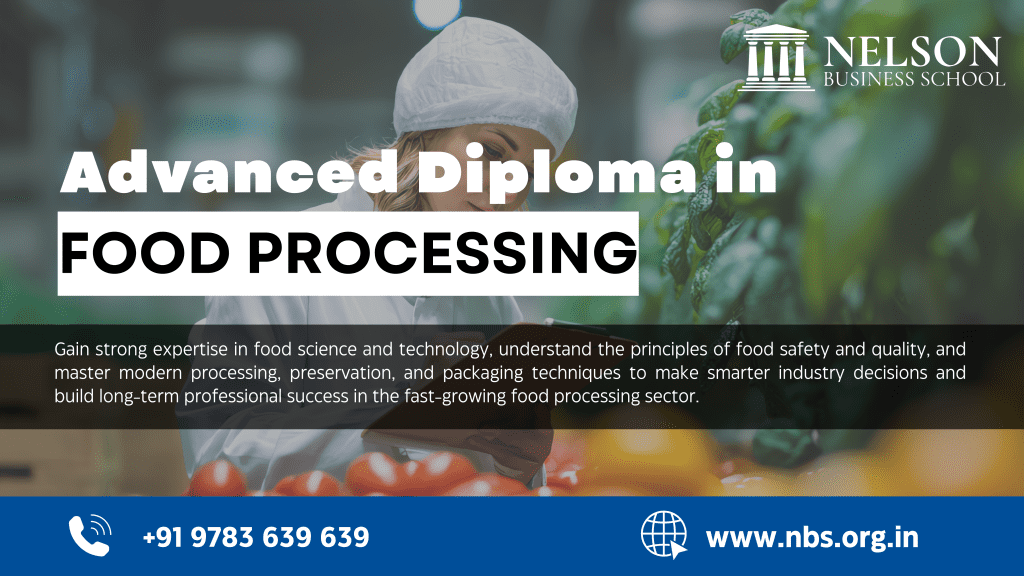
Why an Advanced Diploma in Food Processing is Your Gateway to a High-Growth Career
The global food industry is evolving at a rapid pace, driven by technological innovation, rising consumer expectations, and the growing demand for safe, nutritious, and convenient food products. Today’s food sector requires skilled professionals who understand both the science of food and the technology behind processing, packaging, preservation, and quality control.
An Advanced Diploma in Food Processing is one of the most industry-relevant qualifications designed to prepare students for a wide range of technical, analytical, and managerial roles. From working in large-scale food manufacturing to developing new food innovations, this program opens the door to countless opportunities in India and abroad.
What is an Advanced Diploma in Food Processing?
The Advanced Diploma in Food Processing is a specialized program that blends food science with advanced food technology. It introduces students to the biological, chemical, and physical properties of food, and teaches how these properties can be preserved and enhanced during processing.
The program focuses on:
Food preservation methods
Modern processing technologies
Food safety laws and regulations
Nutritional analysis
Packaging innovations
Industrial food production systems
This diploma is ideal for individuals who want to build a strong career in food manufacturing, food safety, quality assurance, research & development (R&D), and food entrepreneurship.
Importance of Food Processing in Today’s World
Food processing is vital to modern society because it helps ensure global food security, reduces wastage, and enhances the shelf life of food. With the world’s population increasing, efficient food production and distribution systems are essential.
Here’s why food processing is increasingly important:
Food Safety and Hygiene
Strict quality and safety protocols ensure food remains safe for consumption from production to distribution.
Longer Shelf Life
Advanced processing and preservation techniques prevent spoilage and extend product shelf life.
Convenience & Innovation
Ready-to-eat meals, fortified foods, and health-based products have transformed consumer lifestyles.
Nutritional Enhancement
Processing enables fortification of food with vitamins, minerals, and essential nutrients to improve health outcomes.
Reduction of Post-Harvest Losses
Proper handling, storage, and processing help prevent wastage and support farmers.
Objectives of the Program
The Advanced Diploma in Food Processing aims to develop highly skilled professionals who understand the scientific, technological, and regulatory aspects of food production.
The key objectives include:
Teaching the fundamentals of food chemistry, microbiology, and nutrition
Training students in modern processing, preservation, and packaging techniques
Developing skills in quality control, food safety, and regulatory compliance
Understanding industrial food machinery and plant operations
Encouraging innovation in product development and food formulation
Preparing graduates for roles in production, R&D, quality assurance, and safety management
Syllabus & Subjects Covered
This program covers both foundational and advanced concepts to help students gain holistic industry knowledge.
Core Subjects in the Program
1. Fundamentals of Food Science and Nutrition
Understanding food composition, nutrients, and their impact on human health.
2. Food Microbiology and Safety
Study of microorganisms, food contamination, preservation, and HACCP guidelines.
3. Food Chemistry and Analysis
Chemical properties of food and laboratory testing methods.
4. Food Preservation Techniques
Thermal, non-thermal, and traditional techniques to maintain freshness and quality.
5. Food Packaging Technology
Advanced packaging methods that ensure safety, extend shelf life, and improve product appeal.
6. Dairy, Meat, and Poultry Processing
Techniques and standards followed in dairy and meat-based industries.
7. Fruits & Vegetable Processing
Production of jams, juices, pickles, frozen products, and dehydrated foods.
8. Bakery and Confectionery Technology
Manufacturing techniques for baked goods, chocolates, and confectioneries.
9. Food Quality Control & Standards
Compliance with FSSAI, ISO, HACCP, GMP, and international standards.
Practical & Industrial Training
Hands-on lab sessions
Quality testing and inspections
Industrial visits to food processing units
Product development and innovation projects
Real-time case studies
Career Opportunities After Advanced Diploma in Food Processing
The food industry is one of the largest employers globally, offering excellent career growth, job stability, and global mobility.
Popular Job Roles
Food Technologist
Quality Control Officer
Food Safety Supervisor
Production Manager
Packaging Technologist
R&D Assistant
Microbiologist (Food Industry)
Nutrition Product Developer
Food Processing Plant Supervisor
HACCP Consultant
Top Industries That Hire Graduates
Food manufacturing companies
Dairy & meat processing industries
FMCG companies
Government food safety departments
Bakery & confectionery units
Fruits & vegetable processing plants
Research laboratories
Export & packaging companies
Who Should Pursue This Course?
This course is ideal for individuals who:
Are interested in food science, nutrition, or biotechnology
Want a career in food production, quality assurance, or safety
Are working professionals looking to upgrade their skills
Aspire to work in FMCG or large-scale food industries
Want to start their own food processing or packaging business
Skills You Will Gain
By the end of the program, learners develop strong technical and managerial skills including:
Food processing and preservation skills
Quality testing and laboratory analysis
HACCP, FSSAI, and ISO compliance
Technical knowledge of equipment and machinery
Product development and formulation
Packaging and supply chain understanding
Research and analytical decision-making
Why Choose an Advanced Diploma in Food Processing?
Here are strong reasons why this program stands out:
High demand for food technologists and safety officers
Global career opportunities
Rapid industry growth driven by technology and innovation
Excellent salary potential in FMCG and manufacturing
Practical, industry-oriented training
Opportunity to become an entrepreneur in the food sector
Conclusion
The Advanced Diploma in Food Processing is an excellent career-building program for students and professionals who want to enter the booming food industry. With its blend of food science, hands-on training, safety management, and production knowledge, this course prepares you for high-demand roles and empowers you to contribute to a safer, healthier, and more sustainable food system.