
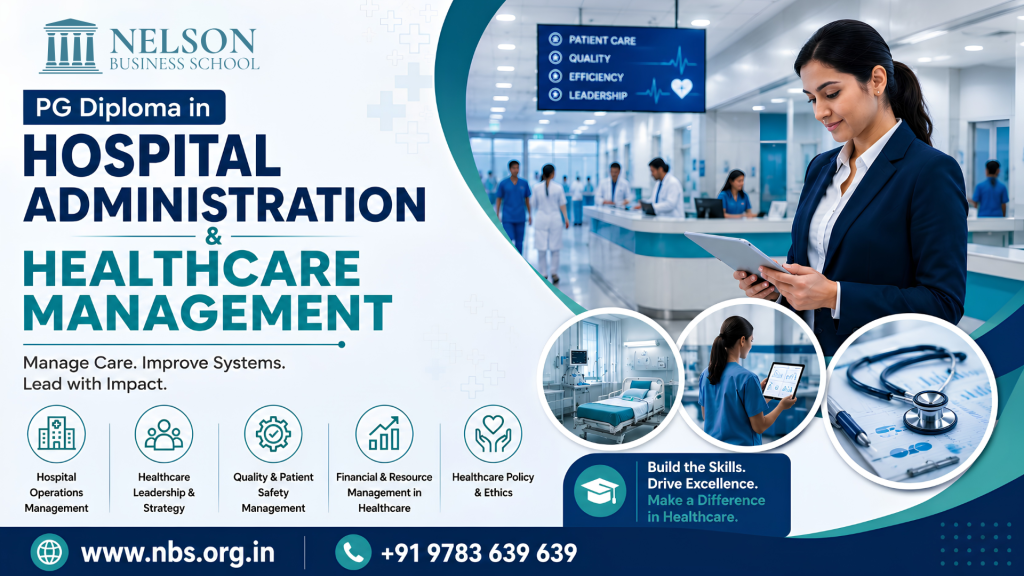
Best PG Diploma in Hospital Administration and Healthcare Management | Top Institute in India
Introduction
India’s healthcare sector is undergoing rapid transformation — driven by rising private hospital chains, growing health insurance penetration, digital health adoption, and increasing demand for quality patient care. Behind every well-run hospital or healthcare facility is a team of skilled administrators managing operations, finance, compliance, and patient experience.
This growing complexity has created strong demand for trained professionals through the PG Diploma in Hospital Administration and Healthcare Management (PGDHAHM). This guide covers everything you need to know — program overview, eligibility, syllabus, career scope, salary potential, and how to identify the right institute for your goals.
What Is a PG Diploma in Hospital Administration and Healthcare Management?
This is a specialized postgraduate program designed to train professionals in the operational, financial, and strategic management of hospitals and healthcare institutions. Core areas typically include:
- 1. Hospital operations and facility management
- 2. Healthcare finance and insurance systems
- 3. Medical records and health information management
- 4. Healthcare quality and accreditation standards
- 5. Hospital marketing and patient relationship management
- 6. Healthcare laws, ethics, and regulatory compliance
The program typically spans 12 months and combines classroom learning with hospital internships, case studies, and real-world administrative exposure.
Why Pursue This Program?
1. Rapidly Expanding Healthcare Sector
India’s healthcare industry continues to grow through private hospital expansion, health-tech adoption, and rising healthcare spending — creating consistent demand for trained administrators.
2. Non-Clinical Career Path in Healthcare
This program offers a strong entry point for those who want to work in healthcare without a clinical medical degree — ideal for commerce, management, or life sciences graduates.
3. Diverse Career Opportunities
Graduates can work across hospitals, diagnostic chains, health insurance companies, healthcare consulting firms, and government health programs.
4. Faster Entry Than an MBA
Compared to a 2-year MBA in Healthcare Management, a PG Diploma offers quicker entry into the workforce while still building strong administrative and management competencies.
5. Recession-Resilient Sector
Healthcare remains one of the more stable industries, offering long-term career security compared to many other sectors.
Eligibility Criteria
While specific requirements vary by institute, general eligibility typically includes:
- 1. A bachelor’s degree in any discipline from a recognized university
- 2. Minimum aggregate marks as specified by the institute (commonly 50% or above)
- 3. Candidates from healthcare, life sciences, commerce, or management backgrounds are often preferred, though not mandatory
- 4. Working professionals in hospital or healthcare settings are also encouraged to apply
Detailed Syllabus Overview
A well-structured PGDHAHM program typically covers:
Module 1: Fundamentals of Hospital Administration
- 1. Hospital organization structure and departments
- 2. Healthcare delivery systems in India
Module 2: Healthcare Finance and Insurance
- 1. Hospital budgeting and financial management
- 2. Health insurance and TPA (Third Party Administrator) processes
Module 3: Health Information Management
- 1. Medical records and documentation systems
- 2. Introduction to Hospital Information Systems (HIS)
Module 4: Healthcare Quality and Accreditation
- 1. NABH and quality accreditation standards
- 2. Patient safety protocols and quality benchmarks
Module 5: Hospital Operations and Facility Management
- 1. Inventory and materials management
- 2. Biomedical equipment and facility planning
Module 6: Healthcare Marketing and Patient Experience
- 1. Hospital branding and patient relationship management
- 2. Service quality and patient satisfaction strategies
Module 7: Healthcare Laws and Ethics
- 1. Medical ethics and patient rights
- 2. Healthcare regulatory compliance (clinical establishment acts, etc.)
Module 8: Internship / Capstone Project
- 1. Hands-on hospital administration experience
- 2. Real-world project on operational or strategic improvement
Career Opportunities After This Program
Graduates can pursue roles such as:
- 1. Hospital Administrator
- 2. Healthcare Operations Manager
- 3. Medical Records/Health Information Manager
- 4. Patient Relationship/Experience Manager
- 5. Healthcare Quality Coordinator
- 6. Health Insurance/TPA Executive
- 7. Healthcare Consultant
Industries and Employers
- 1. Private and corporate hospital chains
- 2. Diagnostic and pathology lab networks
- 3. Health insurance companies and TPAs
- 4. Healthcare consulting firms
- 5. Government health programs and public health institutions
- 6. Medical tourism and wellness organizations
Salary Expectations
Entry-level roles for PGDHAHM graduates typically range from ₹3–6 LPA, with strong growth potential as professionals move into operations management, quality management, or senior administrative roles within a few years of experience.
What Makes a Top Institute for This Course?
When evaluating where to study, look for:
- 1. Curriculum aligned with current healthcare industry practices and accreditation standards
- 2. Faculty with real hospital administration experience
- 3. Strong hospital internship and placement tie-ups
- 4. Practical exposure through case studies and live hospital projects
- 5. Flexible learning formats for working healthcare professionals
PG Diploma in Hospital Administration vs. MBA in Healthcare Management
| Factor | PG Diploma | MBA in Healthcare Management |
|---|---|---|
| Duration | Typically 12 months | 2 years |
| Focus | Practical, operations-focused skills | Broader strategic management training |
| Cost | Generally more affordable | Higher investment |
| Best For | Quick entry into hospital administration roles | Senior leadership and strategic roles |
| Entry Speed | Faster entry into the workforce | Longer academic commitment |
If your priority is quick, practical entry into hospital administration roles, a PG Diploma is often the more efficient path. For those aiming at senior healthcare leadership positions, an MBA may provide broader strategic grounding.
Frequently Asked Questions (FAQs)
Q1. Is PG Diploma in Hospital Administration a good career option? Yes. With continued growth in India’s healthcare sector, this program offers stable, diverse career opportunities in hospital and healthcare management roles.
Q2. Do I need a medical or science background to apply? No, this program is open to graduates from any discipline, making it accessible to commerce, management, and life sciences graduates alike.
Q3. What is the duration of this course? Most programs run for around 12 months, though duration may vary by institute.
Q4. Can I pursue this course while working? Yes, many institutes offer flexible classroom, online, or hybrid formats for working healthcare professionals.
Q5. What is the difference between this diploma and a hospital management certificate course? A PG Diploma offers a more comprehensive curriculum covering finance, operations, quality, and compliance, along with internship exposure — compared to shorter, narrowly focused certificate programs.
Q6. What are the top recruiters after this course? Private hospital chains, diagnostic networks, health insurance companies, healthcare consulting firms, and government health institutions are among the top recruiters.
Conclusion
As India’s healthcare industry continues to expand and modernize, skilled hospital administrators are essential to ensuring efficient, high-quality patient care. A PG Diploma in Hospital Administration and Healthcare Management offers a practical, focused pathway into this stable and rewarding sector — equipping graduates with the operational, financial, and regulatory knowledge needed to succeed.
Ready to build a career in healthcare management? Explore top PG Diploma in Hospital Administration and Healthcare Management programs designed to prepare you for real, in-demand roles across India’s healthcare industry.