
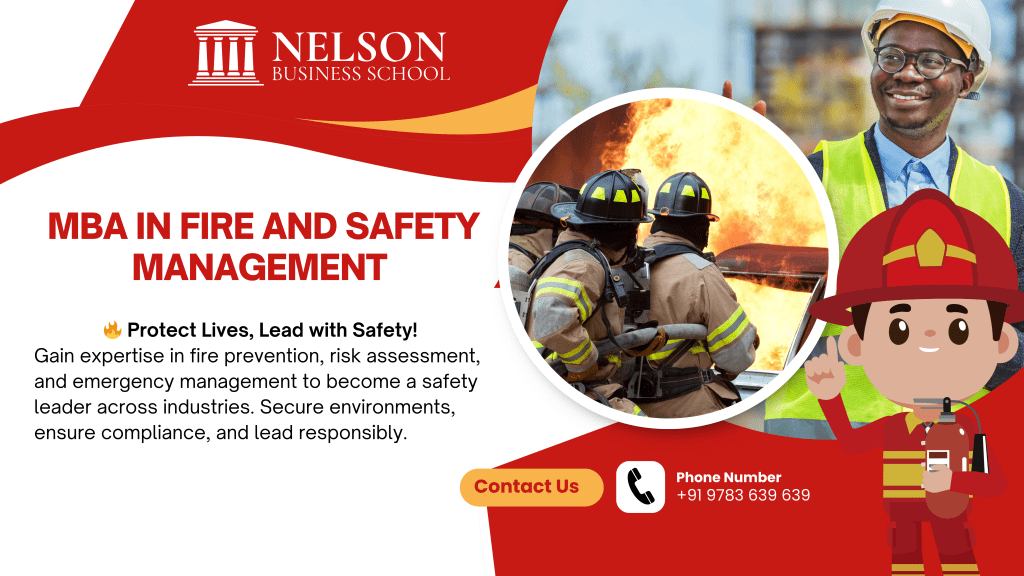
MBA in Fire and Safety Management: Building Professional Leaders for Safer Workplaces and Sustainable Organizations
In today’s rapidly industrializing and urbanizing world, workplace safety and fire prevention have become critical priorities for organizations across all sectors. Industrial accidents, fire hazards, environmental risks, and regulatory non-compliance can result in severe human, financial, and reputational losses. To address these challenges, industries require qualified professionals who can plan, manage, and implement comprehensive safety and fire prevention systems.
An MBA in Fire and Safety Management is a specialized postgraduate program designed to develop skilled safety leaders who can protect lives, assets, and operations while ensuring compliance with national and international safety standards.
What is MBA in Fire and Safety Management?
An MBA in Fire and Safety Management is a management-focused degree that integrates core business administration principles with advanced fire prevention, safety engineering, and risk management practices. The program equips students with the knowledge and leadership skills needed to identify hazards, prevent accidents, respond to emergencies, and build a strong safety culture within organizations.
This program goes beyond technical safety training by emphasizing strategic planning, regulatory compliance, leadership, and organizational safety management.
Importance of Fire and Safety Management in Modern Industries
Fire and safety management is no longer limited to compliance—it is a strategic function that directly impacts business continuity and employee well-being. With strict safety regulations and growing awareness of occupational health and environmental protection, organizations must proactively manage risks.
Key reasons why fire and safety management is essential include:
Prevention of workplace accidents and fire incidents
Protection of employees, infrastructure, and equipment
Compliance with government safety regulations and standards
Reduction of operational downtime and financial losses
Strengthening organizational reputation and trust
Ensuring emergency preparedness and disaster resilience
Industries now prioritize safety leaders who can integrate safety systems into everyday business operations.
Objectives of MBA in Fire and Safety Management
The primary objectives of the program are to:
Develop managerial competence in fire and safety operations
Equip professionals with advanced risk assessment and hazard control skills
Strengthen emergency response and disaster management capabilities
Promote occupational health, safety, and environmental responsibility
Build leadership skills for creating safe and compliant workplaces
Align safety management with organizational goals and sustainability
Detailed Curriculum Overview
The curriculum of an MBA in Fire and Safety Management is designed to balance management fundamentals with specialized safety knowledge.
Core Management Subjects
Principles of Management
Organizational Behavior
Strategic Management
Human Resource Management
Operations Management
Business Communication
Fire and Safety Specialization Subjects
Fire Prevention and Protection Systems
Industrial Safety Management
Occupational Health and Hygiene
Risk Assessment and Hazard Analysis
Safety Engineering and Accident Investigation
Emergency Planning and Disaster Management
Environmental Safety and Sustainability
Legal Aspects of Fire and Safety Management
Safety Audits and Compliance Management
This structured curriculum prepares students for both leadership and technical decision-making roles.
Skills Developed Through the Program
Students graduating with an MBA in Fire and Safety Management gain industry-relevant skills such as:
Fire risk assessment and prevention planning
Workplace safety management and compliance monitoring
Emergency response coordination and crisis leadership
Incident investigation and root cause analysis
Safety training and awareness program development
Communication with regulatory bodies and stakeholders
Leadership and team management in high-risk environments
Career Opportunities After MBA in Fire and Safety Management
Graduates of this program have access to a wide range of career opportunities across industries, including:
Fire and Safety Manager
Health, Safety, and Environment (HSE) Manager
Safety Officer / Safety Auditor
Risk and Compliance Manager
Fire Protection Consultant
Industrial Safety Engineer
Disaster and Emergency Management Officer
Safety Training and Compliance Consultant
These professionals are in demand across manufacturing, construction, oil & gas, power plants, aviation, healthcare, infrastructure projects, logistics, and multinational organizations.
Who Should Pursue MBA in Fire and Safety Management?
This program is ideal for:
Graduates seeking a specialized career in safety and risk management
Working professionals in safety, engineering, or operations roles
Fire service personnel aiming for management-level positions
Facility and plant managers responsible for safety compliance
Professionals from defense or emergency services transitioning to corporate roles
Scope and Future Growth
With increasing industrial expansion, infrastructure development, and strict safety regulations, the demand for qualified fire and safety professionals continues to grow. Organizations are investing heavily in safety systems, audits, and training to minimize risks and ensure sustainable operations.
Emerging areas such as smart safety systems, environmental risk management, and integrated disaster response further enhance career opportunities for safety management professionals.
Benefits of Choosing an MBA in Fire and Safety Management
High demand across multiple industries
Leadership-oriented career path
Opportunities in domestic and international markets
Direct impact on employee safety and organizational well-being
Long-term career stability and professional growth
Conclusion
An MBA in Fire and Safety Management is a powerful qualification for individuals committed to building safer, healthier, and more resilient workplaces. By combining management expertise with specialized safety knowledge, this program prepares professionals to lead safety initiatives, manage risks effectively, and ensure compliance in high-risk environments.
For those aspiring to make a meaningful impact by protecting lives and organizational assets, an MBA in Fire and Safety Management offers a rewarding and future-ready career pathway.