
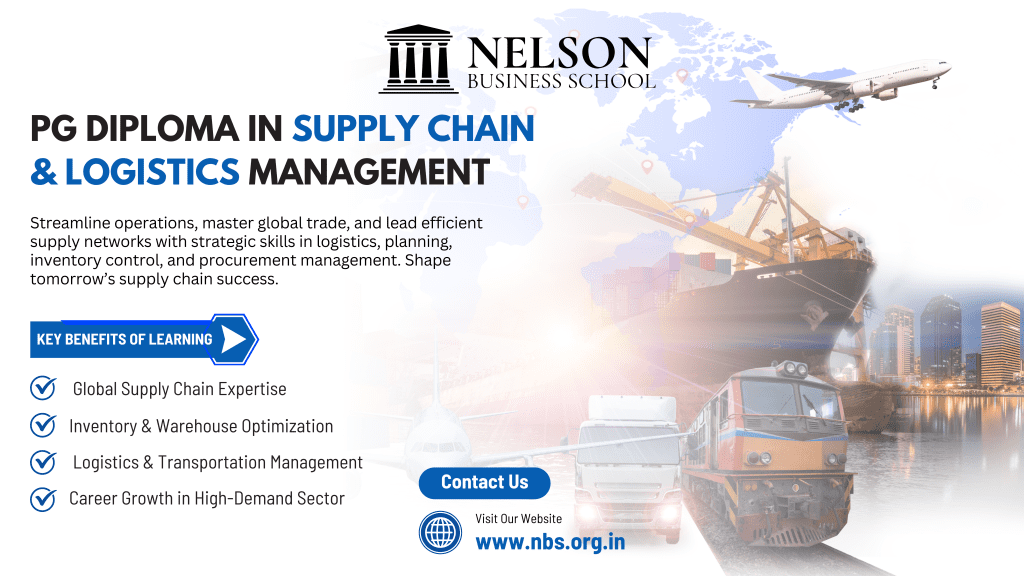
PG Diploma in Supply Chain and Logistics Management
Introduction
In today’s globally connected and fast-paced business environment, efficient supply chain and logistics management has become a critical success factor for organizations across industries. From procurement and production to warehousing, transportation, and last-mile delivery, supply chain operations directly influence cost efficiency, customer satisfaction, and competitive advantage.
The Post Graduate Diploma in Supply Chain and Logistics Management is a specialized program designed to equip learners with in-depth knowledge of supply chain strategies, logistics operations, and modern technology-driven practices. This program prepares professionals to manage complex supply networks and optimize operational performance in dynamic global markets.
Program Overview
The PG Diploma in Supply Chain and Logistics Management integrates management principles with operational and analytical approaches to supply chain planning and execution. The program focuses on developing a strong understanding of end-to-end supply chain processes, including sourcing, inventory control, transportation management, demand planning, and distribution strategy.
The curriculum combines theoretical concepts with real-world applications, enabling learners to solve practical business problems using industry-relevant tools and methodologies.
Objectives of the Program
The primary objectives of the program are to:
Develop comprehensive knowledge of supply chain and logistics systems
Enhance skills in planning, coordinating, and controlling supply chain operations
Build expertise in inventory management, procurement, and distribution
Strengthen analytical and decision-making capabilities
Introduce learners to digital and technology-enabled supply chain solutions
Prepare professionals for leadership roles in logistics and operations management
Curriculum Structure and Key Subjects
The curriculum is designed to cover both foundational and advanced concepts in supply chain and logistics management.
Core Areas of Study
Fundamentals of Supply Chain Management
Supply chain concepts and frameworks
Demand forecasting and supply planning
End-to-end supply chain integration
Procurement and Vendor Management
Strategic sourcing and purchasing
Supplier evaluation and relationship management
Contract management and negotiation
Inventory and Warehouse Management
Inventory control techniques
Warehouse design and operations
Material handling systems
Logistics and Transportation Management
Transportation modes and network design
Freight management and route optimization
Domestic and international logistics
Operations and Production Planning
Production scheduling and capacity planning
Lean and agile supply chain practices
Quality and productivity management
Supply Chain Analytics and Technology
Supply chain analytics and performance measurement
ERP and supply chain information systems
Role of AI, automation, and digital platforms
Risk Management and Sustainability
Supply chain risk assessment and mitigation
Sustainable and green logistics practices
Compliance and regulatory considerations
Learning Methodology
The program adopts a practical and industry-oriented learning approach, including:
Interactive lectures and discussions
Case studies based on real business scenarios
Practical assignments and project work
Simulation exercises and analytical tools
Industry-focused assessments
This approach ensures learners gain hands-on exposure to supply chain challenges and solutions.
Eligibility Criteria
Graduation in any discipline from a recognized university
Suitable for fresh graduates and working professionals
Basic understanding of business or operations is beneficial but not mandatory
Skills and Competencies Developed
On completion of the program, learners acquire:
End-to-end supply chain management expertise
Strong analytical and problem-solving skills
Operational planning and coordination abilities
Knowledge of logistics systems and technologies
Vendor and stakeholder management skills
Strategic and cost-optimization capabilities
Career Opportunities
Graduates of the PG Diploma in Supply Chain and Logistics Management can pursue roles such as:
Supply Chain Manager
Logistics Manager
Procurement and Purchasing Manager
Warehouse and Distribution Manager
Operations Manager
Inventory Planner
Supply Chain Analyst
Logistics and Operations Consultant
Industry Applications
Career opportunities span across various sectors, including:
Manufacturing and Industrial Enterprises
Retail and E-commerce
FMCG and Consumer Goods
Transportation and Logistics Companies
Pharmaceuticals and Healthcare
Automotive and Engineering Industries
Import-Export and International Trade
Future Scope and Industry Relevance
With the growth of e-commerce, global sourcing, and digital transformation, supply chain and logistics functions are becoming increasingly strategic. Organizations seek skilled professionals who can manage complex supply networks, adopt technology-driven solutions, and ensure resilience against disruptions.
The PG Diploma in Supply Chain and Logistics Management prepares learners to meet these evolving demands, making it a future-oriented qualification with strong global relevance.
Conclusion
The PG Diploma in Supply Chain and Logistics Management offers a comprehensive learning pathway for individuals aiming to build expertise in operations, logistics, and supply chain strategy. By combining managerial concepts with practical applications and modern technology, the program equips professionals to drive efficiency, reduce costs, and enhance organizational performance.
For those aspiring to build successful careers in logistics and supply chain management, this diploma provides the knowledge, skills, and confidence required to excel in today’s competitive business environment.